
Performance Patterns Occupational Therapy
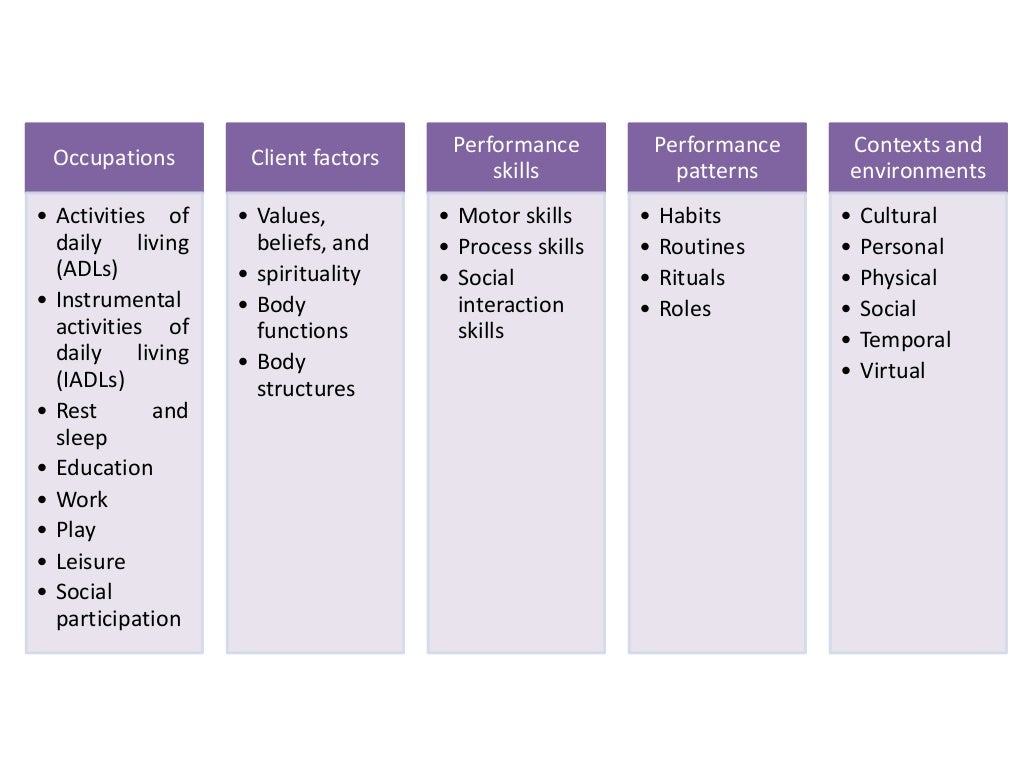
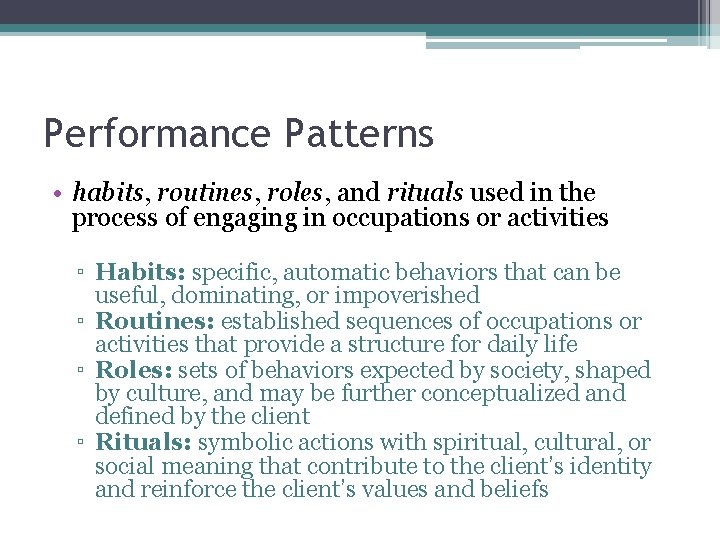
Performance Patterns Occupational Therapy - Web aota views the definition of performance deficits as support for an occupational focus for all occupational therapy evaluations and interventions. Web occupational therapy practitioners are concerned with 4 different types of performance patterns: Understand the role of o.t. All clients (i.e., persons, groups, and populations) possess client factors. Web the 5 domains of occupational therapy (ot) are occupations, content & environment, performance patterns, performance skills, and client factors. Useful habits support occupations, impoverished habits do not support occupations, and. 1 three types of habits are described in the otpf: Web taxonomy, theory, or model of occupational therapy. Client factors affect performance skills and engagement in occupation. The goal of occupational therapy. Effective january 1, 2017, medicare and most other third party payers (e.g., medicaid, private insurers) began using these codes. Web recognize potential impact of symptoms on adl performance. Web demonstrate an understanding of occupational performance patterns and contexts by defining and giving an example of each. Web taxonomy, theory, or model of occupational therapy. Occupational therapy intervention plans incorporate occupations to address participation and engagement and to further the development of performance skills and performance patterns. Web as a result of changes in occupational therapy education (e.g., updated education standards) and in practice (e.g., increased productivity expectations, emerging areas of practice), aota appointed a series of task forces to, over time, revise the 2002 versions of the fwpes for the ots and the otas. All clients (i.e., persons, groups, and populations) possess client factors. Web client factors are specific capacities, characteristics, or beliefs that reside within the person and that influence performance in occupations. Web occupational therapy practitioners are concerned with 4 different types of performance patterns: Web occupations help to shape clients' identities and influence their overall health and wellbeing. Web patterns of performance are another component of occupational performance analyzed by the ot practitioner. Web by focusing on occupational performance, occupational therapy practitioners assist clients in becoming actively engaged in their life activities. (a) to describe the domain that centers and grounds the profession’s focus and actions and (b) to outline the process of occupational therapy evaluation and intervention. Performance patterns refer to “habits, routines, roles, and rituals used in the process of engaging in occupations or activities that can support or hinder occupational performance” (aota, 2014, p. Web taxonomy, theory, or model of occupational therapy. They define the meaning in otherwise seemingly random sequences of activities. Web occupational therapy practitioners are concerned with 4 different types of performance. Web recognize potential impact of symptoms on adl performance. Web occupational therapy addresses the needs and goals of the client related to engagement in areas of occupation, and the profession’s domain consists of occupations, contexts, performance patterns, performance skills, and client factors that may influence participation in various areas of occupation. Web performance patterns are the habits, routines, rituals, and. 1 three types of habits are described in the otpf: Web the 5 domains of occupational therapy (ot) are occupations, content & environment, performance patterns, performance skills, and client factors. Web aota views the definition of performance deficits as support for an occupational focus for all occupational therapy evaluations and interventions. Orlando health offers a wide range of occupational therapy. Habits, routines, roles, and rituals. Web the first two models presented in this chapter are the occupational performance (op) model ( pedretti & early, 2001 ), and with it the occupational therapy practice framework (otpf) ( aota, 2008 ), and the occupational performance model (australia) (opma) ( chapparo & ranka, 1997 ). Web the 5 domains of occupational therapy (ot). Web recognize potential impact of symptoms on adl performance. Web occupational therapy addresses the needs and goals of the client related to engagement in areas of occupation, and the profession’s domain consists of occupations, contexts, performance patterns, performance skills, and client factors that may influence participation in various areas of occupation. Client factors affect performance skills and engagement in occupation.. • the primary goal of occupational therapy is to enable people to participate in the activities of everyday life. The purpose of dpa is to identify where performance breaks down and test out solutions. Web by focusing on occupational performance, occupational therapy practitioners assist clients in becoming actively engaged in their life activities. Web using the occupational therapy practice framework:. Client factors affect performance skills and engagement in occupation. Web as a result of changes in occupational therapy education (e.g., updated education standards) and in practice (e.g., increased productivity expectations, emerging areas of practice), aota appointed a series of task forces to, over time, revise the 2002 versions of the fwpes for the ots and the otas. (a) to describe. Web the first two models presented in this chapter are the occupational performance (op) model ( pedretti & early, 2001 ), and with it the occupational therapy practice framework (otpf) ( aota, 2008 ), and the occupational performance model (australia) (opma) ( chapparo & ranka, 1997 ). Web client factors are specific capacities, characteristics, or beliefs that reside within the. Specific behaviors that are often performed automatically or without much thought. Client factors affect performance skills and engagement in occupation. Web performance patterns are the habits, routines, rituals, and roles that an individual, organization, or population carries out. Useful habits support occupations, impoverished habits do not support occupations, and. Web as a result of changes in occupational therapy education (e.g.,. 1 three types of habits are described in the otpf: Web taxonomy, theory, or model of occupational therapy. Performance patterns refer to the client’s habits, routines, roles, and rituals. Habits, routines, roles, and rituals. Specific behaviors that are often performed automatically or without much thought. Web the first two models presented in this chapter are the occupational performance (op) model ( pedretti & early, 2001 ), and with it the occupational therapy practice framework (otpf) ( aota, 2008 ), and the occupational performance model (australia) (opma) ( chapparo & ranka, 1997 ). Web occupational therapy addresses the needs and goals of the client related to engagement in areas of occupation, and the profession’s domain consists of occupations, contexts, performance patterns, performance skills, and client factors that may influence participation in various areas of occupation. Performance patterns refer to “habits, routines, roles, and rituals used in the process of engaging in occupations or activities that can support or hinder occupational performance” (aota, 2014, p. Effective january 1, 2017, medicare and most other third party payers (e.g., medicaid, private insurers) began using these codes. Web client factors are specific capacities, characteristics, or beliefs that reside within the person and that influence performance in occupations. Web as a result of changes in occupational therapy education (e.g., updated education standards) and in practice (e.g., increased productivity expectations, emerging areas of practice), aota appointed a series of task forces to, over time, revise the 2002 versions of the fwpes for the ots and the otas. Web using the occupational therapy practice framework: The goal of occupational therapy. • the primary goal of occupational therapy is to enable people to participate in the activities of everyday life. Web demonstrate an understanding of occupational performance patterns and contexts by defining and giving an example of each. Web performance patterns are the habits, routines, rituals, and roles that an individual, organization, or population carries out.
Occupational performance areas, activity categories and activities of

Person Environment Occupation Performance (PEOP) model Ocupational
Occupational Therapy Practice Framework American Occupational Therap…
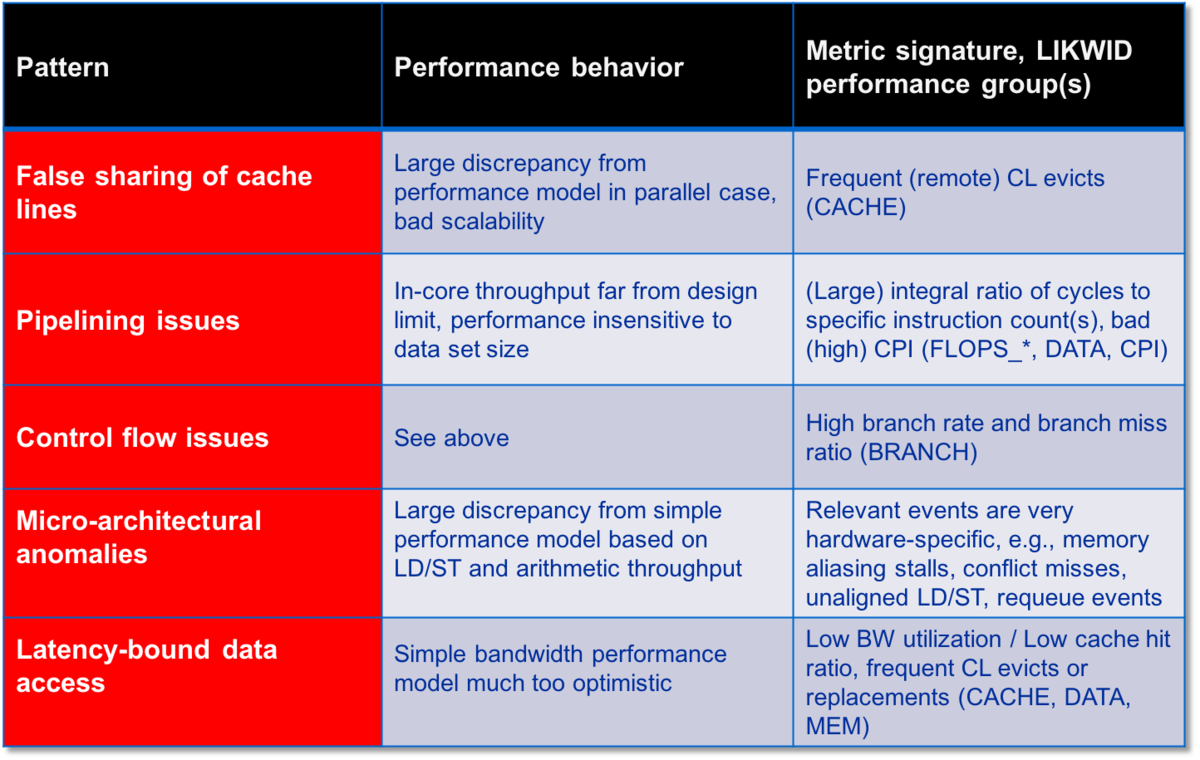
Performance Patterns HPC Wiki

AOTA Practice Framework O.T. Domain Occupation Environment Performance
Occupational Therapy Practice Framework Domain Process 2 nd
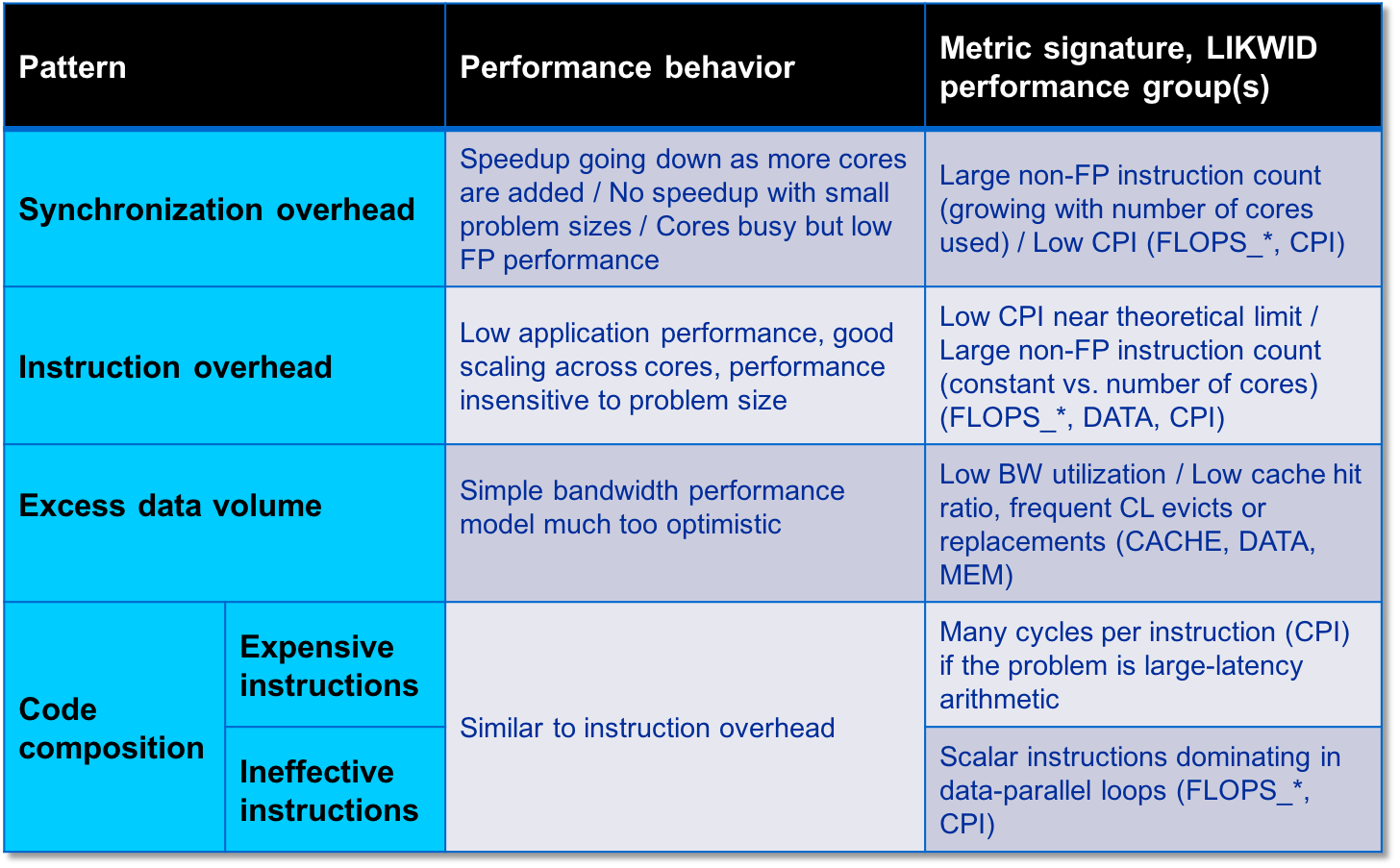
Performance Patterns HPC Wiki

Model Illustration Occupational Performance Model OPM Australia

PPT Meeting the Occupational Therapy and SpeechLanguage Pathology
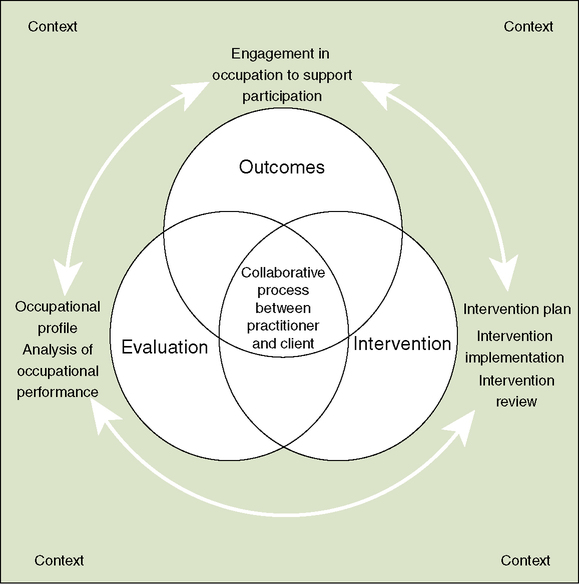
Occupational Therapy Process Evaluation, Intervention, and
(A) To Describe The Domain That Centers And Grounds The Profession’s Focus And Actions And (B) To Outline The Process Of Occupational Therapy Evaluation And Intervention That Is Dynamic And Linked To The Profession’s Focus On And Use Of Occupation.
Web The Intended Purpose Of The Framework Is Twofold:
Client Factors Affect Performance Skills And Engagement In Occupation.
Useful Habits Support Occupations, Impoverished Habits Do Not Support Occupations, And.
Related Post: